What Happens When We Stop Cooking to Eat and Start Cooking to Explore?
For many families navigating ARFID (Avoidant Restrictive Food Intake Disorder), sensory sensitivities, or selective eating, mealtimes can become stressful. Parents often feel pressure to get their child to try new foods, while children may feel overwhelmed by unfamiliar smells, textures, or expectations.
But what if we changed the goal?
What if the goal wasn’t eating at all?
When we cook to explore instead of cooking to eat, we create opportunities for curiosity, learning, and positive experiences with food. This shift can be especially powerful for children who experience anxiety around meals or have strong sensory aversions. Instead of focusing on bites taken, we focus on building comfort, confidence, and connection.
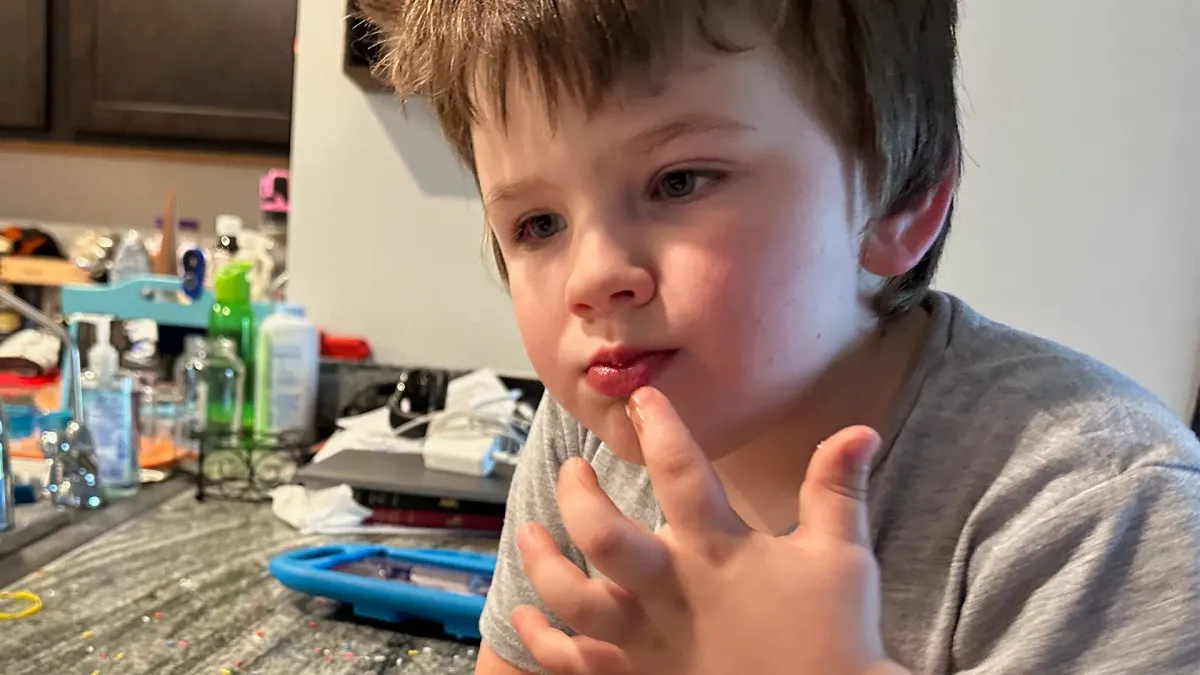
At Little Village Schoolhouse, we believe some of the most meaningful learning happens when children are having fun. One of Elliot’s favorite activities is cracking eggs and watching them break like Humpty Dumpty. While allowing unlimited egg smashing would certainly be entertaining, it would also be expensive and wasteful.
So we found a way to turn his fascination into an engaging learning experience that combines food exploration, science, math, creativity, and environmental responsibility.
Activity: Humpty Dumpty Egg Science
This simple activity allows children to interact with food in a low-pressure way while developing important skills and making predictions along the way.
What You’ll Need
- Eggs
- A sewing needle or push pin
- A bowl
- Paint, markers, or stickers
- Paper and pencil for tally marks
Step 1: Blow Out the Egg
Over a bowl, carefully use a needle to poke a small hole in both the top and bottom of the egg. The holes should be approximately the size of a standard toothpick.
Step 2: Empty the Egg
Place one hole against your mouth and hold the other over the bowl. Blow gently until the contents of the egg come out into the bowl.
Set the bowl aside. We will use the eggs later.
Step 3: Clean the Shell
Rinse the shell thoroughly, making sure all of the egg residue has been removed from the inside.
Allow it to dry or gently pat it dry with a paper towel.
Step 4: Decorate Your Humpty Dumpty
Now for the fun part.
Use paint, markers, stickers, or any art supplies you have on hand to create your own Humpty Dumpty character. Make one or make a whole family of them.
Children who may not be ready to touch eggs during cooking are often excited to engage with them during art activities.
Step 5: Put Humpty to the Test
Once your Humpty Dumpty is ready, it’s time for an experiment.
Drop or gently knock Humpty off different surfaces and see how many falls he can survive before he can no longer be “put back together again.”
Keep track of each fall using tally marks.
Before each drop, ask questions such as:
- How many falls do you think Humpty can survive?
- Will a bigger egg last longer?
- Does dropping from a higher place change the outcome?
- What happens if Humpty lands on carpet versus tile?
Children are practicing prediction, observation, and critical thinking while having fun.
Learning Extensions
Turn the activity into a mini science and math lesson by:
- Recording the number of falls each egg survives
- Creating a chart of the results
- Comparing different sizes of eggs
- Testing different landing surfaces
- Making predictions before each experiment
- Calculating averages if multiple eggs are used
This transforms a simple activity into a hands-on STEM experience.
Step 6: Use the Eggs
Remember the eggs you saved in the bowl?
Now you can:
- Make scrambled eggs
- Bake cookies
- Use them in another recipe
- Create a sensory play activity
This teaches children that food can be explored, enjoyed, and respected without unnecessary waste.
Why This Activity Works
Children learn best when they feel safe, engaged, and in control.
For children with ARFID or sensory differences, direct pressure to eat can increase anxiety and reduce willingness to interact with food. Activities like this remove the expectation of eating and replace it with exploration.
Along the way, children gain exposure to:
- The sight of eggs
- The smell of eggs
- The texture of eggshells
- Food preparation skills
- Scientific thinking
- Early math concepts
- Environmental responsibility
Most importantly, they build positive experiences around food.
And positive experiences are often the first step toward greater food acceptance.
The Bigger Lesson
Food exploration does not have to happen at the dinner table.
Sometimes it happens through art projects, science experiments, cooking activities, or imaginative play. When we remove pressure and focus on connection, we create opportunities for children to develop trust in both food and themselves.
Whether your child eventually eats the eggs or simply enjoys decorating Humpty Dumpty, they are still learning. They are still exploring. And they are still making progress.
Every positive interaction with food helps build familiarity. Every moment of curiosity helps reduce fear. Every playful experience creates a foundation for future success.
Summary
Children with ARFID, sensory sensitivities, and selective eating challenges often need opportunities to explore food without pressure. By shifting our focus from eating to engaging, we can create positive experiences that support learning, confidence, and self-determination.
The Humpty Dumpty Egg Science activity combines food exploration, creativity, science, math, and environmental responsibility in a way that feels fun rather than stressful. Best of all, there is no requirement to eat. The goal is simply to interact, explore, and learn.
Ready to Make Food Exploration Fun?
At Little Village Schoolhouse, we believe learning and therapy should be meaningful, engaging, and enjoyable for learners of all ages. Whether your child is navigating ARFID, sensory sensitivities, selective eating, or other developmental challenges, we can help you find creative, neurodiversity-affirming strategies that work for your family.
Contact Little Village Schoolhouse today to learn how coaching, support, and playful learning experiences can help your child build confidence around food and beyond.